
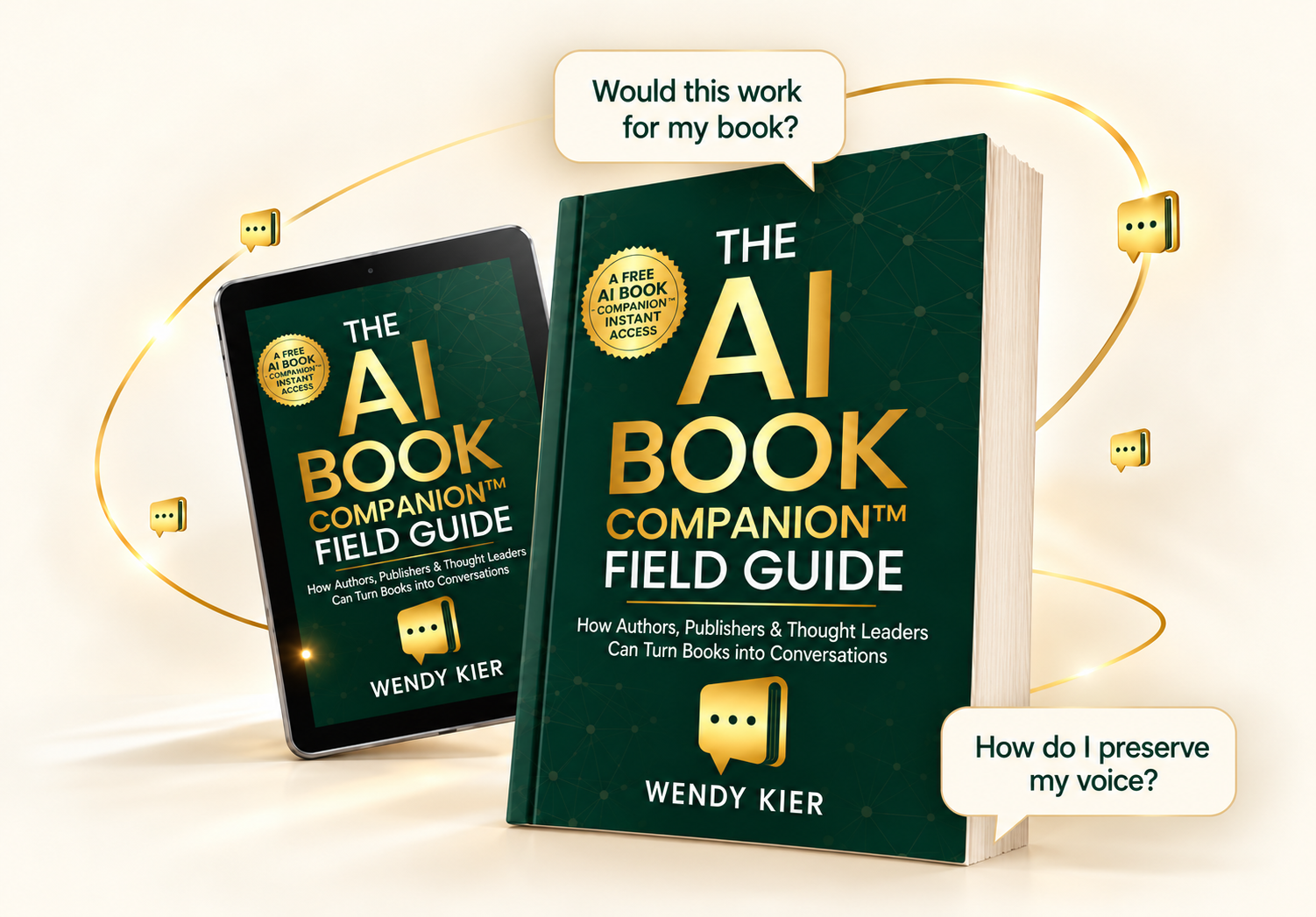
AI Book Companion™
Help your readers work with the ideas in your book
An AI Book Companion™ gives readers a way to have a conversation with your published work. They can ask questions, explore your thinking and work through how an idea relates to their own situation.
I create each Companion through EmpowerAi™, using my ENCODE methodology to define how it works with your book, how it responds to readers and where its boundaries sit.
Your book remains the foundation. The Companion gives people another way to use what you have written.
What is an AI Book Companion?
An AI Book Companion™ is an interactive AI system built around an author's book and authorised supporting material. It sits alongside the book, allowing readers to question, explore and apply the author's ideas through conversation.
A reader might understand a chapter but struggle to see how it relates to their circumstances. They might want an exercise explained differently, or need to talk through something before deciding what to do with it.
They can bring that question to the Companion in their own words. They don't need to know how to write a prompt or arrive with everything neatly worked out.
The Companion responds within the purpose and boundaries agreed for that particular book. When the work doesn't support an answer, it should recognise that limit and make it clear.
When a reader understands the idea but needs help using it
There is often a gap between reading something and knowing what to do with it. You may recognise this from your own readers or clients. Someone understands your framework when you explain it, then gets stuck when they try to use it on their own.
With a Companion alongside the book, they have somewhere to take questions such as, “Can you explain this more simply?” or “How could I use this when I'm dealing with this particular situation?”
Sometimes that conversation happens while they are reading. Sometimes they return weeks later because something has happened in their life or business and an idea from the book has become relevant again.
The purpose is to help them stay connected to the thinking you have already shared, with room to explore what it means for them.
Every book needs its own kind of Companion
A practical business book may need a Companion that helps readers work through a framework and consider their next action. A reflective book may need a slower conversation, giving someone time to explore an idea without pushing towards an answer.
That is why I start with the book and the reader. We establish what the Companion is there to help someone do, which materials it can draw on and what it should leave alone.
We also consider how it should communicate. Your voice involves more than familiar phrases. It includes how you explain things, the assumptions you question and the way your methodology fits together. The Companion should reflect that approach while remaining clear that the reader is interacting with AI.
The method behind the Companion
ENCODE is how I explain the application of the wider EmpowerAi™ methodology to a book. Its six elements are Extract, Navigate, Codify, Organise, Design and Engage.
The work begins with understanding your published thinking and the role you want the Companion to play. I develop a job description for you to review, then create the framework and instructions that govern the conversation.
That includes how the Companion uses your methodology, how it responds when a reader is unclear, what it can interpret and when it needs to stop. We then build and test it in the agreed platform, reviewing its behaviour against the job we created it to do.
These decisions inform one another throughout the process. Testing can reveal something we need to revisit in the framework, and your feedback helps us assess whether the Companion represents your work properly.
AI Book Companion™
Another way to work with your book
Keep the reading experience. Add a conversation when it helps.
Traditional reading
- Follow the author’s ideas at your own pace
- Pause, highlight and make your own notes
- Reflect on what the ideas mean to you
- Work through the exercises in the book
- Return to chapters when you need them
- Build your own understanding of the work
Reading with a Companion
- Explore those ideas through conversation
- Ask questions when something is unclear
- Consider how an idea relates to your situation
- Talk through an exercise when you get stuck
- Revisit the book’s thinking as new situations arise
- Request a simpler explanation or smaller steps
What this looks like in practice
Caroline and The Mindset Diet
Caroline plans to incorporate her Companion into her existing programme, giving clients another way to work with the book's ideas between sessions. Its value sits within the experience she already offers her clients.
Creating it also brought her closer to her own material. As she put it, “I've learnt my book better… and I've learned my voice better.”
Sarah Grace and From Shadows to Self-Love
During beta testing, readers used Sarah's Companion to explore questions from the book and situations arising in everyday life. Some asked for information in smaller chunks. One dyslexic tester found speaking her questions and listening to responses particularly helpful.
These are individual experiences, and the options available depend on the platform. They show how different ways of interacting can help some readers engage with the same body of work.
Because Sarah's book covers sensitive experiences, the Companion was designed with boundaries around its role, including when to encourage appropriate human support. It sits alongside her work as a therapist.
Bernie Curd and The Unrushed Woman
Grace, Bernie's Companion, sits within a wider reader experience that includes her book, community and other services. After Grace was introduced, Bernie reported approximately 100 book sales at €25 each, generating around €2,500 in gross book revenue. Around 50 readers also purchased other products or services.
Her wider marketing and business activity contributed to those results. We cannot attribute the sales to the Companion alone, but her experience offers an example of how a book and Companion can sit within an established business.
Turn a moment of reading into a conversation
Explore the ideas in your book, with a Companion alongside you.
The book
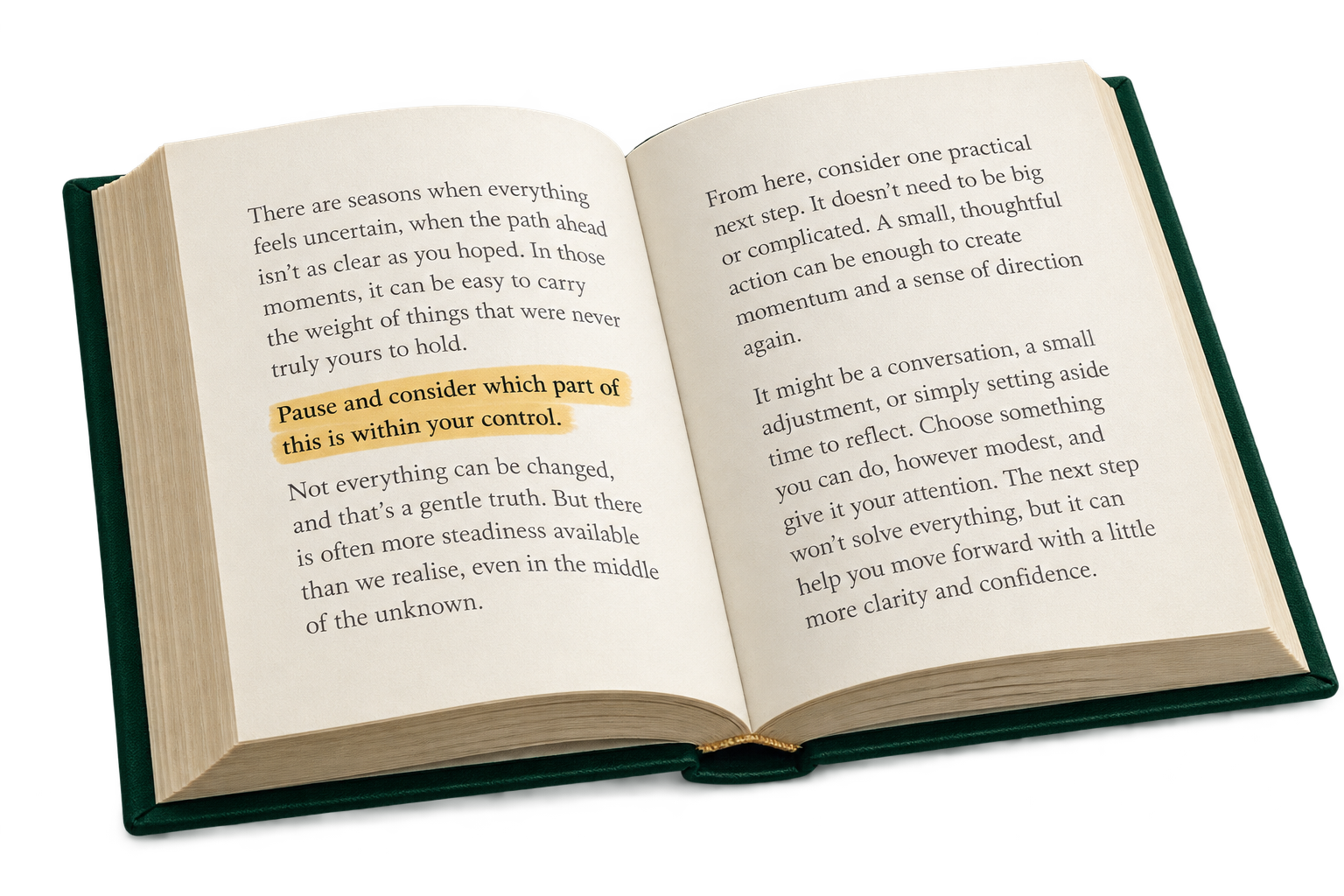
Your AI Book Companion™
Illustrative conversation
Ask a question
Explore a passage that needs more explanation.
Explore your situation
Consider how the author’s ideas relate to your life.
Work through an exercise
Talk through a step when you feel unsure.
The book remains the foundation. The conversation helps you work with it.
How it could fit into your business
You might include the Companion with your book, offer paid access, or make it part of a programme or membership. It could support readers after a workshop or give existing clients a way to revisit your published frameworks between sessions.
We decide its role before choosing how to deliver it. Access, payments and the reader experience need to fit the purpose of the Companion and the capabilities of the platform.
Commercial value will look different for each author. It may sit in a paid book bundle, a separate offer or the experience you provide within an existing programme. Revenue depends on how the offer is priced, introduced and used.
Your work and the materials behind your Companion
Your book and original intellectual property remain yours. You receive access to the client-specific framework, instructions and supporting materials I create for your Companion through a shared project folder.
This gives you a documented definition of what has been built, alongside the working Companion. It matters if you want to review it, change provider or consider rebuilding it elsewhere in the future. A move to another platform would still require its own assessment and testing.
The underlying EmpowerAi™ methodology and proprietary frameworks I use to create the Companion remain my intellectual property.
We also define boundaries around the use of your material and the information readers should share. These are part of responsible design and testing; AI can still make mistakes, and platform terms and privacy settings also matter.
Who I work with
This service is particularly suited to authors whose books contain expertise, frameworks or reflective practices that readers could use in their own lives or businesses.
You may be a coach, consultant, therapist, educator or another expert with an established body of work. A programme, membership, workshop or speaking business can give the Companion a clear place within what you already offer.
You don't need a technical brief before approaching me. You do need the rights to the material we will use and a willingness to review how the Companion represents it.
About Wendy Kier
I'm Wendy Kier, founder of EmpowerAi™ and creator of AI Book Companion™ and the ENCODE methodology. I'm also an author, and books have played a significant part in my own learning and personal development.
Through creating Companions for my own books and other authors, I've become increasingly interested in what happens when readers can bring their questions back to a published body of work. My role is to create the structure that makes those conversations useful while respecting the author's thinking and the reader's judgement.
Tell me about your book
If you can see a useful role for a Companion alongside your book, tell me about the work and what you would like readers to be able to do with it.
I'll read what you send and, if I think I can help, invite you to book a conversation with me. We can then establish the scope, platform, costs and support your project would need.
AI Book Companion™
Frequently asked questions
What a Companion does, how it works with your book and what to consider before creating one.
What is an AI Book Companion™?
An AI Book Companion™ is built around an author’s published work and gives readers a way to have a conversation with the ideas inside it. They can ask questions, explore a framework or consider how something they have read relates to their own circumstances.
The book provides the thinking. The Companion gives readers another way to engage with it, within a purpose and set of boundaries agreed for that particular book.
How is this different from uploading my book into ChatGPT?
Uploading a book gives AI access to its contents. There are still decisions to make about how it should use that material, which sources take priority and what should happen when a reader asks something the book cannot answer.
When I create a Companion, I define its job, conversation framework and boundaries around the author’s work. That structure is designed to keep the experience grounded in the book and its intended purpose.
Does the Companion replace reading the book?
The Companion is designed to sit alongside the book. The published work contains the author’s ideas, context, experience and methodology. Readers can use the Companion when they want to explore something further.
They might open it halfway through a chapter, while working through an exercise or months later when an idea becomes relevant again. How much of the book it can quote or reproduce also needs to be defined.
Is my book suitable for an AI Book Companion™?
A useful starting point is whether your book contains something readers could actively work with through conversation. That might be a framework, exercises, a process or a particular way of thinking about a subject.
We also consider where readers get stuck and whether being able to ask questions would help. Some books have a clear role for a Companion. Others need more thought before deciding whether one would add enough value.
Will it reflect my voice and methodology?
That is part of the design and testing. We look at how you explain ideas, how your frameworks fit together and which principles need to remain recognisably yours.
The aim is for the conversation to feel consistent with your authorised work, while making it clear that the reader is interacting with AI. Your review helps us assess how closely the Companion represents your approach.
What happens when the answer is outside my book?
The Companion should recognise when the approved material does not support an answer and explain that limit. It should avoid filling the gap with an opinion or recommendation attributed to you.
We define which sources it can use and test how it responds when a conversation moves beyond its role. AI can still make mistakes, so clear boundaries and testing remain important.
Can it support readers who prefer different ways of learning?
Readers may be able to ask for a simpler explanation, smaller steps or a different way of presenting an idea. Depending on the platform, they may also be able to speak their questions and listen to responses.
Some readers testing the Companions described these options as helpful. Individual needs vary, and the available features depend on how each Companion is delivered.
Can I charge for access or include it in a programme?
There are several possible models. You could include access with your book, offer it separately or make it part of an existing programme, membership or client experience.
The right arrangement depends on its purpose, your audience and the platform’s access and payment options. The Field Guide includes examples of different approaches; those individual results do not establish what another author will earn.
What do I own when my Companion has been created?
Your book and original intellectual property remain yours. I give you access to the client-specific framework, instructions and supporting materials I create for your Companion through a shared project folder.
The underlying EmpowerAi™ methodology and proprietary frameworks remain my intellectual property. Having your client-specific materials documented gives you a basis for reviewing or rebuilding the Companion in future, although moving platforms would require assessment and testing.
What about privacy and books covering sensitive subjects?
The design needs to reflect the subject and the people using it. We consider what the Companion should discuss, where it should stop and when it should encourage appropriate human support. Its role needs to be particularly clear around health, trauma and other sensitive material.
Readers also need information about what the platform stores,
who may access conversations and whether anything is remembered
AI Book Companion™
What a Companion does, how it works with your book
and what to consider before creating one.
An AI Book Companion™ is built around an author’s published
work and gives readers a way to have a conversation with the
ideas inside it. They can ask questions, explore a framework
or consider how something they have read relates to their
own circumstances.
The book provides the thinking. The Companion gives readers
another way to engage with it, within a purpose and set of
boundaries agreed for that particular book.
Uploading a book gives AI access to its contents. There are
still decisions to make about how it should use that material,
which sources take priority and what should happen when a
reader asks something the book cannot answer.
When I create a Companion, I define its job, conversation
framework and boundaries around the author’s work. That
structure is designed to keep the experience grounded in
the book and its intended purpose.
The Companion is designed to sit alongside the book.
The published work contains the author’s ideas, context,
experience and methodology. Readers can use the Companion
when they want to explore something further.
They might open it halfway through a chapter, while working
through an exercise or months later when an idea becomes
relevant again. How much of the book it can quote or reproduce
also needs to be defined.
A useful starting point is whether your book contains something
readers could actively work with through conversation. That
might be a framework, exercises, a process or a particular way
of thinking about a subject.
We also consider where readers get stuck and whether being
able to ask questions would help. Some books have a clear
role for a Companion. Others need more thought before
deciding whether one would add enough value.
That is part of the design and testing. We look at how you
explain ideas, how your frameworks fit together and which
principles need to remain recognisably yours.
The aim is for the conversation to feel consistent with your
authorised work, while making it clear that the reader is
interacting with AI. Your review helps us assess how closely
the Companion represents your approach.
The Companion should recognise when the approved material
does not support an answer and explain that limit. It should
avoid filling the gap with an opinion or recommendation
attributed to you.
We define which sources it can use and test how it responds
when a conversation moves beyond its role. AI can still make
mistakes, so clear boundaries and testing remain important.
Readers may be able to ask for a simpler explanation, smaller
steps or a different way of presenting an idea. Depending
on the platform, they may also be able to speak their
questions and listen to responses.
Some readers testing the Companions described these options
as helpful. Individual needs vary, and the available features
depend on how each Companion is delivered.
There are several possible models. You could include access
with your book, offer it separately or make it part of an
existing programme, membership or client experience.
The right arrangement depends on its purpose, your audience
and the platform’s access and payment options. The Field Guide
includes examples of different approaches; those individual
results do not establish what another author will earn.
Your book and original intellectual property remain yours.
I give you access to the client-specific framework,
instructions and supporting materials I create for your
Companion through a shared project folder.
The underlying EmpowerAi™ methodology and proprietary
frameworks remain my intellectual property. Having your
client-specific materials documented gives you a basis for
reviewing or rebuilding the Companion in future, although
moving platforms would require assessment and testing.
The design needs to reflect the subject and the people using
it. We consider what the Companion should discuss, where it
should stop and when it should encourage appropriate human
support. Its role needs to be particularly clear around
health, trauma and other sensitive material.
Readers also need information about what the platform stores,
who may access conversations and whether anything is remembered
between visits. Those details depend on the platform and setup.
People should understand the environment before deciding what
to share, and avoid providing unnecessary personal information.
Adapted from The AI Book Companion™ Field Guide by Wendy Kier.
Frequently asked questions
What is an AI Book Companion™?
How is this different from uploading my book into ChatGPT?
Does the Companion replace reading the book?
Is my book suitable for an AI Book Companion™?
Will it reflect my voice and methodology?
What happens when the answer is outside my book?
Can it support readers who prefer different ways of learning?
Can I charge for access or include it in a programme?
What do I own when my Companion has been created?
What about privacy and books covering sensitive subjects?
Adapted from The AI Book Companion™ Field Guide by Wendy Kier.