
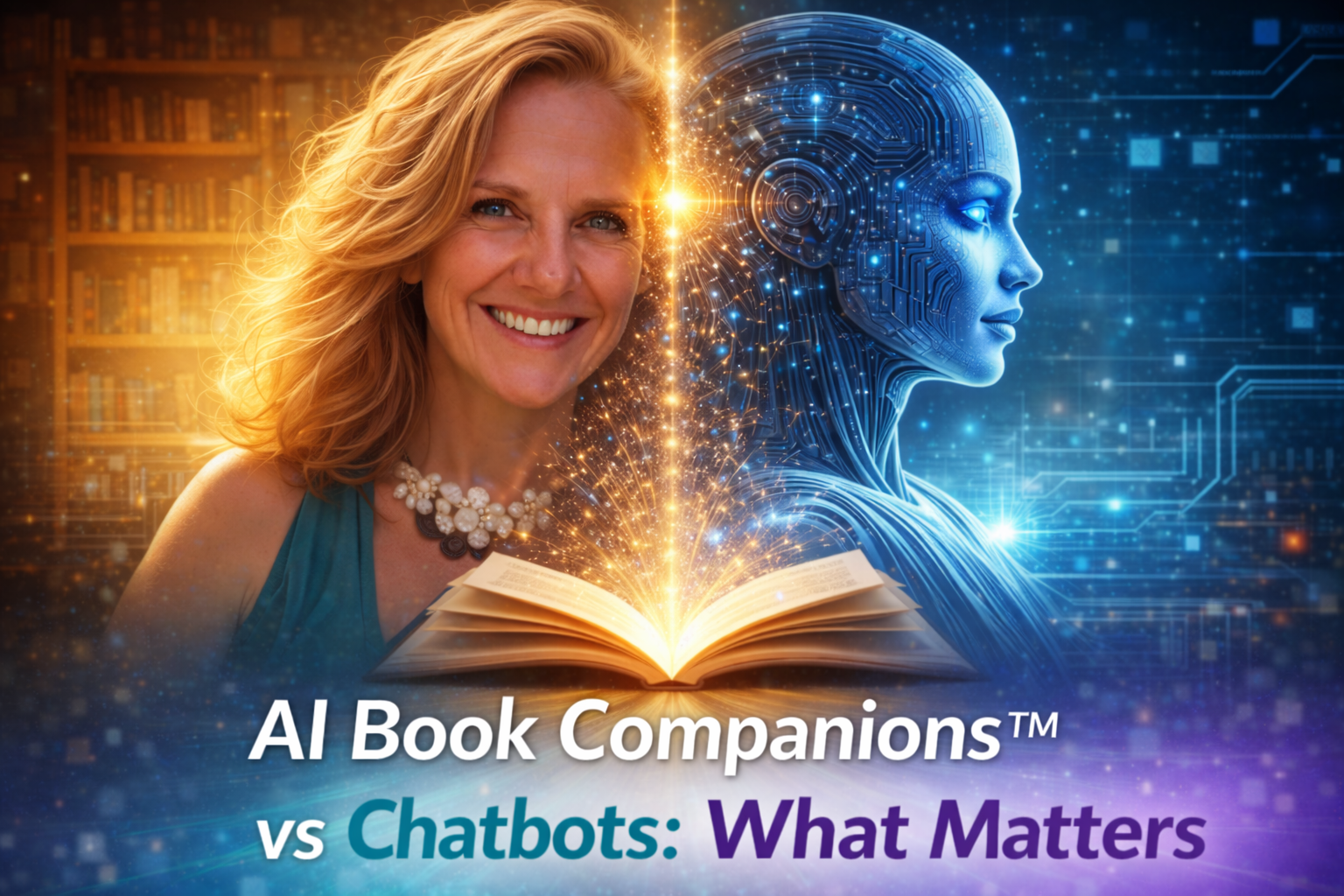
AI Book Companions vs Chatbots: What Matters
What Is the Difference Between an AI Book Companion and a Chatbot?
An AI Book Companion is a structured AI system built from a published book to operate strictly within that book’s framework, voice, and intellectual boundaries. A generic chatbot is designed for broad, open-ended conversation and generates responses across wide domains rather than remaining contained within one authored work.
That difference is architectural. And it matters more than it first appears.
AI Book Companion (Structured & Governed)
A governed AI Book Companion is defined by structure before automation.
• Purpose: To help readers apply, explore, and deeply understand the specific ideas within a book.
• Scope: Restricted to the book’s content, concepts, and framework.
• Source Material: Configured around one published work and its defined intellectual architecture.
• Governance: Built with narrative containment and ethical guardrails to remain within the author’s intended scope.
• Experience: Designed to create a clear container for interaction rather than open-ended improvisation.
This is where the conversation around AI Book Companions vs Chatbots becomes precise. It is not about whether interaction is possible. It is about whether interaction is governed.
What the Market Often Assumes
The common assumption is simple.
Upload the manuscript.
Connect it to a chatbot.
Allow readers to ask questions.
For lighter material, that may be perfectly adequate.
The issue emerges when a book contains structured methodology, professional responsibility, or nuanced intellectual work. In those cases, interaction without governance can slowly shift tone, interpretation, and boundaries.
That shift is rarely dramatic. It tends to be gradual.
I understand why the shortcut is appealing. On the surface, it looks efficient. The difficulty is that efficiency and containment are not the same thing, and in authored work that distinction carries weight.
Where the Structural Gap Appears
Generic chatbots operate inside broad generative systems. They predict responses based on probability patterns drawn from wide training data.
Books are not probabilistic. They are authored.
Without containment:
• Frameworks can extend beyond their original limits
• Language can soften into something more generic
• Readers may struggle to distinguish authored doctrine from generated interpretation
• Intellectual boundaries can blur over time
I have seen this happen in small ways. A model answers a reader’s question confidently and the language sounds entirely plausible, but it stretches a concept just slightly beyond how the author originally framed it. The reader may not notice. The author eventually would. Over time, those small extensions accumulate.
For authors whose authority rests on clarity of framework, that gradual drift is not theoretical. It has positioning consequences.
The Governed Alternative
When I first began looking at how books might interact with AI, my concern was not capability. It was containment. Once something becomes probabilistic, the responsibility shifts.
A different approach begins with architectural mapping.
Before any AI system is configured, the intellectual structure of the book is clearly defined. Core arguments are identified. Conceptual limits are written explicitly. Ethical parameters are documented.
Only then is the system configured.
In Bernie Curd’s case, the early discussions focused on containment. We defined how the Companion would operate within the context of the book and how it would interact with readers responsibly. It needed to reflect her voice, maintain a clear container around her framework, and recognise when a question required signposting to external support rather than further interpretation. That groundwork was put in place before anything was configured.
That sequencing is not technical detail. It is governance.
You can read the full category definition here: What is?
A structured AI Book Companion™ Agent operates within defined intellectual boundaries. It does not invent beyond the manuscript. It does not reinterpret beyond mandate. It extends authored thinking without dissolving it.
When a Simple Chatbot May Be Enough
It is important to be clear.
A generic chatbot can be entirely appropriate for:
• Informal engagement
• Commentary-based content
• Visibility-focused publishing
A governed AI Book Companion becomes more relevant when:
• The book contains a defined framework
• The author works in coaching, therapy, leadership, or education
• Professional nuance requires containment
• The book forms part of a wider service ecosystem
You can see how this works in practice in the Bernie Curd case study.
Practical Implications for Authors
The distinction between AI Book Companions vs Chatbots ultimately shapes more than user experience.
It affects:
• How your authority compounds over time
• How securely intellectual property remains contained
• How responsibly readers engage with interactive guidance
• How your book integrates into broader business architecture
When interaction is governed, every reader exchange reinforces the same intellectual structure. Over time, that consistency strengthens positioning rather than fragmenting it.
Interaction alone is not the objective.
Structure determines whether authority strengthens or diffuses.
Closing
AI Book Companions vs Chatbots is not a debate about tools. It is a distinction about governance and containment.
One operates in an open generative environment.
The other operates within authored architecture.
If you would like to explore how this is implemented within a structured installation, you can review the full AI Book Companion™ details here: What is?
Key Insights
- AI Book Companions vs Chatbots is a structural distinction, not a feature comparison.
- Governance preserves voice, framework, and intellectual property over time.
- Structure must be defined before automation is introduced.
Frequently Asked Questions About AI Book Companions
What is the main difference between an AI Book Companion and a chatbot?
An AI Book Companion is structured around one published book and operates within defined intellectual and ethical boundaries. A generic chatbot is designed for broad, open-ended conversation and does not automatically preserve authored containment.
Can a chatbot weaken an author’s authority?
Over time it can, particularly if conceptual limits are not clearly defined. Generative systems may extend beyond the author’s original framework without deliberate governance.
Is a governed AI Book Companion necessary for every book?
No. It is most relevant where the book contains structured methodology, professional responsibility, or forms part of a broader ecosystem of services.
Can this structure protect intellectual property?
When built within clearly defined architectural and governance boundaries, it helps maintain containment around voice, concepts, and scope.
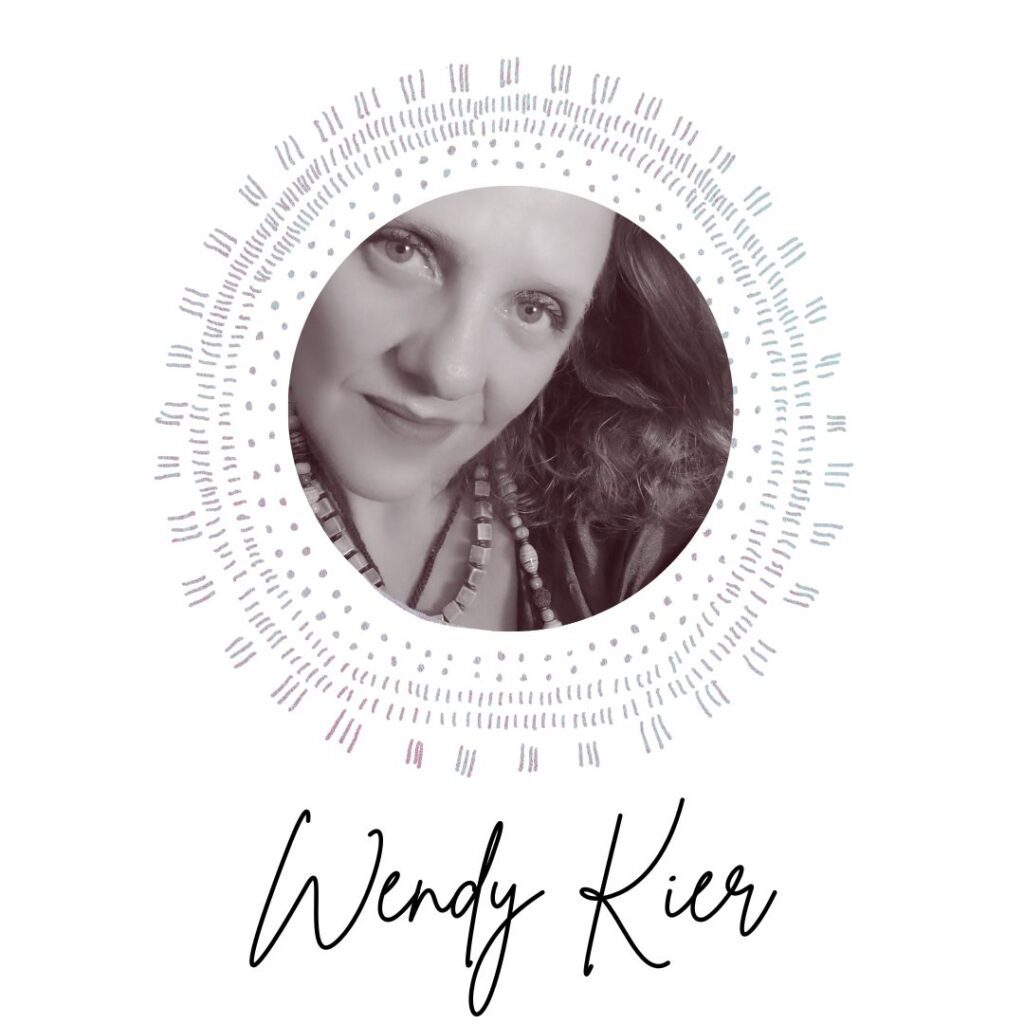
The Founder Wendy Kier
EmpowerAi™ was founded by Wendy Kier, an ethics-first artificial intelligence strategist working at the intersection of authorship, governance, and structured business architecture.
She understands the weight carried by experts whose knowledge cannot scale beyond their personal time and energy.
Her work is grounded in the belief that expertise should be translated into intelligent systems without compromising ownership, voice, or long-term authority.
EmpowerAi™ reflects this position. It is a methodology shaped by lived experience, strategic discipline, and a commitment to building artificial intelligence infrastructure that protects rather than extracts.
The methodology stands independently, but it is led by a founder who understands both the responsibility and the risk involved in architecting expertise for the age of intelligent systems.